10 Things to Look for in an Online Tutor
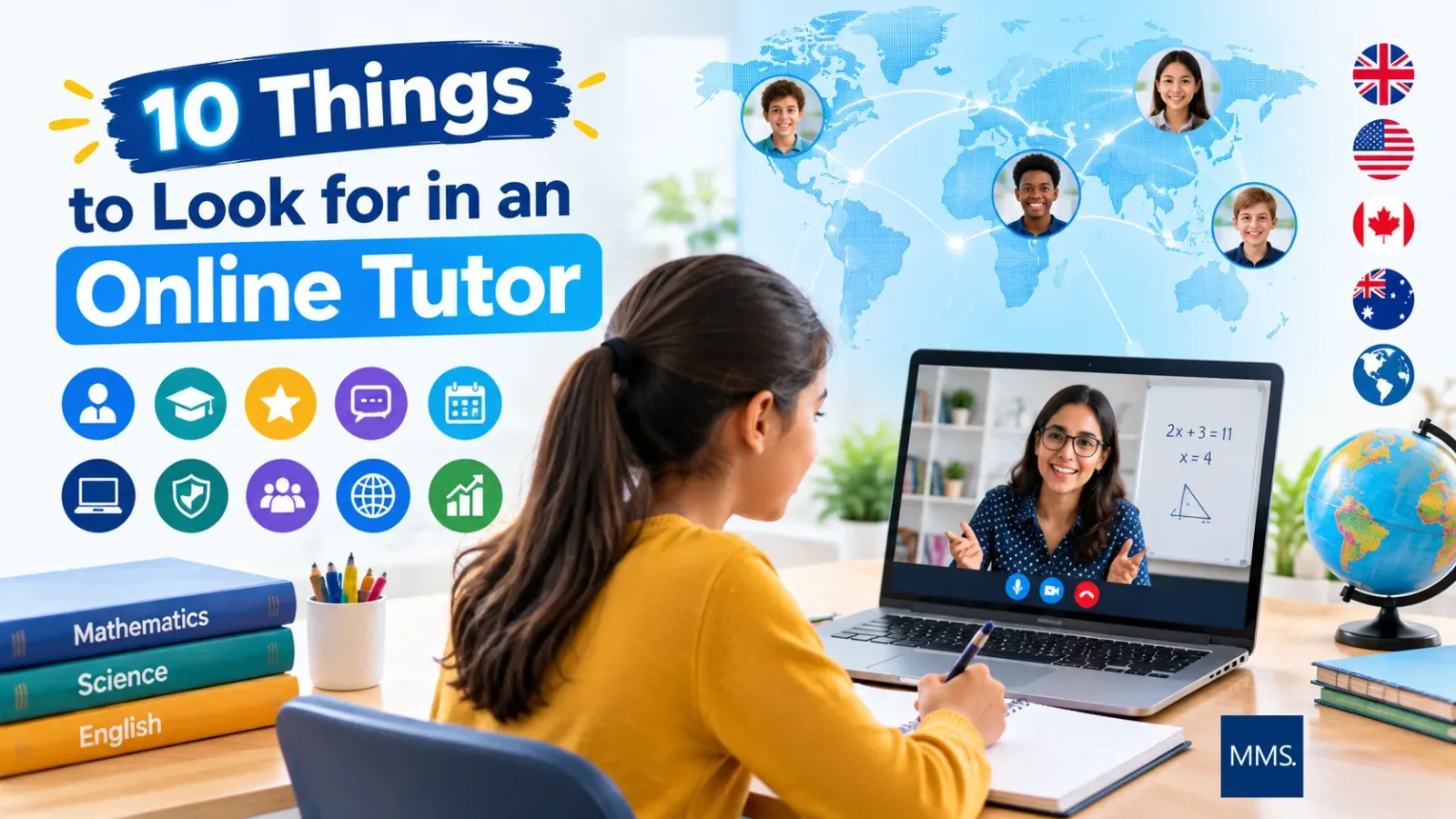
What to Look for in an Online Tutor Before You Book
I’ve sat in on a lot of first lessons that quietly fell apart. Not because the tutor was weak; usually the reverse. They knew the subject inside out, then spent forty minutes talking at a nervous twelve-year-old and never checked whether a single idea had landed. The parent had hired a CV instead of a teacher. That’s the mistake most people make with an online tutor. A profile tells you where someone studied. It tells you nothing about whether your child will open their mouth in the lesson. So before you book anyone, here’s what’s actually worth watching for, loosely in the order it tends to matter.
1. Real depth in your subject, not a menu of ten
Treat the profile that offers maths, physics, chemistry, English and economics under one name with suspicion. Real subject depth is narrow, not wide. An online tutor who truly understands physics can explain why a projectile arcs the way it does rather than just slotting numbers into a formula; the difference is on show in our own breakdown of projectile motion problems. The fastest test: ask one specific question from whatever your child is studying right now. The reply reveals more than any qualification.
2. Familiarity with your exam board
People skip past this and regret it. AQA, Edexcel, OCR and the iGCSE boards don’t simply reword the same paper; they weight topics differently, mark differently, and reward different things in the longer answers. A tutor who has taught your board already knows where the marks are hiding. Before you even interview anyone for GCSE, it pays to understand how the topics and grades fit together; that way you can ask sharp questions about the exact paper your child sits.
3. Safeguarding you can actually check
Your child sits alone in a video call with this person. Give that the same weight you’d give a stranger walking into your living room. So ask it plainly: are you DBS-checked, and may I see it? Are lessons recorded? Is there a written safeguarding policy? A professional answers all three without a flicker. Defensiveness is its own answer.
4. A teaching style that fits this child
There isn’t a “best” teaching style in the abstract; there’s only the one that works for the learner in front of you. The confident, chatty kid comes alive with a tutor who volleys questions straight back. The anxious one freezes under that same approach and needs someone who builds a bit of safety first. This is the strongest case for one-to-one online tutoring: the entire session bends around one child rather than averaging itself across a group of six.
5. Lessons with an actual shape
Sit in on a trial and ask yourself something blunt afterwards: could you sum up what happened in one sentence? A real lesson has a backbone: a quick look back at last week, one clear focus, a worked example or two, then the student having a go while the tutor watches and nudges. The red flag is the lesson that’s really supervised homework. If your child does all the lifting and the tutor only marks it, you’re paying tutor rates for company.
6. Someone who makes the student do the thinking
Good tutors talk far less than you’d guess. They ask, then let the silence sit long enough for the student to attempt an answer, even when it’s a little awkward. The learning lives in that pause, not in the tidy explanation that would have filled it.
Notice how long a tutor waits. If they answer their own questions within three seconds, it looks efficient and teaches almost nothing.
7. Feedback that actually reaches you
You’re not in the room, which makes the feedback loop everything. After each session you should come away knowing what was covered, where your child struggled, and what comes next. A formal report isn’t necessary; two honest lines will do, but weeks of silence mean nobody’s tracking progress, the tutor included.
8. Technology that gets out of the way
The tech should be close to invisible: a steady connection, a shared interactive whiteboard you can both write on, audio that doesn’t drop. When the tools behave, you stop noticing them.
Your side of the setup is lighter than most parents fear; here’s exactly what you need to start. The tutor, though, should have their whiteboard and materials open before minute one, not scrambling while your child watches.
9. Proof from other families
Reviews help, but read them for detail, not stars. “Lovely tutor” tells you nothing. “She went from a grade 4 to a 7 and stopped dreading Thursday nights” tells you almost everything. Ask to speak to a current family, and if you want a yardstick, the traits that keep showing up in strong tutors make a useful checklist to read those reviews against.
10. A trial lesson you’re free to walk away from
Any tutor who’s confident in their teaching offers a trial and won’t sulk if you pass. Treat it as a two-way audition. Watch your child more than the tutor: do they loosen up? Do they attempt things they’d normally dodge? Do they come out a fraction more willing than they went in?
That reaction is the real signal, and it’s exactly why we run a free trial lesson so you can judge the fit before a penny changes hands.
What every one of these is really asking
Strip the ten points back, and they’re all proxies for one question: does this person leave my child more capable and more independent over time? The qualifications, the exam boards, the whiteboards, the reviews: they matter only insofar as they serve that. If you want the fuller version of how we think about it, our complete guide to online tutors takes the long way round. Choose with that one question in front of you, and you’ll rarely pick wrong.
Conclusion
The right online tutor isn't the one with the longest list of subjects or the slickest website. It's the person who knows your child's exam board, teaches in a way that suits how they learn, makes them do the thinking, and tells you plainly how things are going. Safeguarding you can verify, and a trial lesson with no strings attached is the baseline, not extras.
Use the ten points above as a checklist when you speak to tutors or platforms. If a tutor ticks most of them after a trial lesson, you've likely found a good fit. If they don't, move on without guilt; a better match will make far more difference than another month of lessons that aren't working.
Frequently Asked Questions
How do I know if an online tutor is qualified?
Ask about their degree and teaching background, which exam boards they've taught, and how long they've tutored your child's level. A good tutor or platform will answer clearly and won't mind you checking. Reviews from other parents and a trial lesson tell you the rest.
Should an online tutor have a DBS check?
In the UK, yes, it's sensible to expect one. An enhanced DBS check is the standard for anyone working one-to-one with children. Ask to see it, or ask the platform how it vets tutors and how lessons are monitored.
How long before I see results from online tutoring?
Most families notice a change in confidence within a few weeks. Measurable progress in marks usually takes a term or so of regular sessions, depending on how big the gaps were and how often your child has lessons.
Is a trial lesson worth doing?
Yes. A trial shows you how the tutor explains things, whether your child feels comfortable, and whether the lesson has a clear structure. It is the quickest way to judge fit before paying for a block of sessions.
What should I ask a tutor before booking?
Ask which exam board and topics they'll focus on, how they'll measure progress, how often you'll get feedback, what happens if a lesson is missed, and how they'd adapt if your child finds a topic hard.