Online Tutoring vs Traditional Tutoring: Which Is the Best Way of Learning?
Online Tutoring vs Traditional Tutoring: An Overview
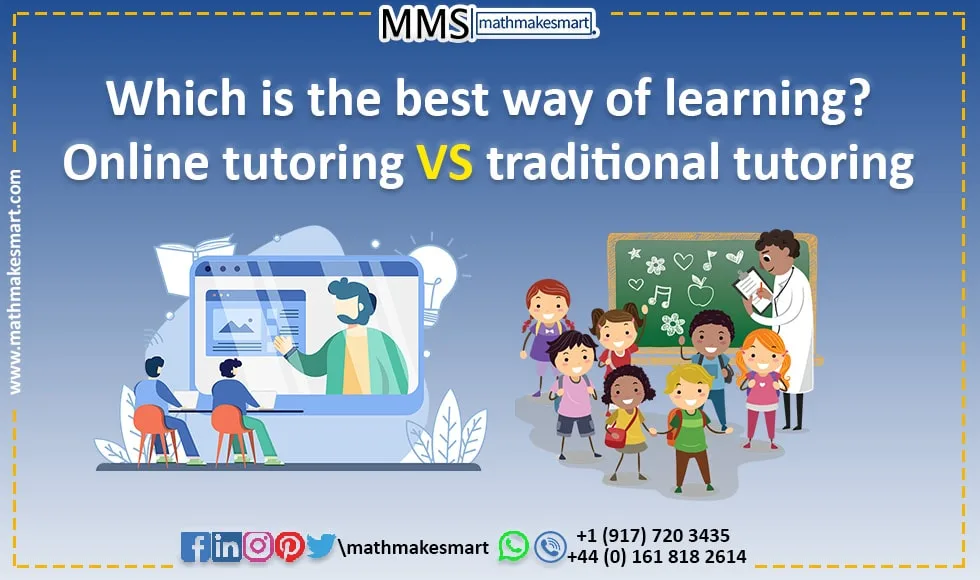
Is online tutoring or traditional tutoring the best way of learning for your child? With a new school year starting, many parents want to close the gap the summer break left behind, and they are weighing up both options. Thanks to technology, online tutoring has become more popular than ever, but the right choice still depends on your child. In this article we compare the pros and cons of each so you can decide with confidence.

Every method has strengths and weaknesses. The best approach is to talk to your child, understand how they like to learn, and then choose the option that suits them.
What Is Online Tutoring?
Online tutoring is a way of teaching where a tutor and student connect over the internet from anywhere in the world, using a laptop, tablet or phone. Lessons use tools such as digital whiteboards, screen sharing, worksheets and messaging.
Pros of Online Tutoring
Convenience: Students can attend lessons from anywhere, even while travelling, so classes are rarely missed. All you need is an internet connection and a device. You can also choose a tutor who is not available locally, which puts excellent tutors from around the world at your fingertips.
Saves time and money: There is no travel, so you save on transport costs and time. Online tutors often charge lower fees than local tutoring centres, and you can compare experts to find the right fit for your needs and budget. If you are leaning towards online tutoring, try a free trial with Math Make Smart.
Tech skills: Students who learn online become more confident with technology, an essential skill for school and work. Online lessons also open up new ways of learning, from interactive worksheets to educational games.
Cons of Online Tutoring
Distractions: The internet can pull attention away in seconds, and the tutor is not physically in the room. Parents can help by keeping an eye on lessons and choosing the right time to reserve their child’s online home tuition schedule.
Hands-on skills: Practical skills such as sewing, hairdressing, electrical work or plumbing are much harder to learn online and usually need in-person training.

What Is Traditional (Face-to-Face) Tutoring?
With traditional tutoring, students travel to a set place at a set time, often learning in a small group. It is usually more expensive than online tutoring, and you may have less choice over who the teacher is.

Pros of Traditional Tutoring
Personal interaction: Teachers and students can sometimes connect more easily face to face. Children who feel more comfortable with a teacher in the room may learn better this way, so involve your child in the decision.
Social environment: In a classroom, students meet new people and make friends, and the teacher can read body language and respond to each child.
Cons of Traditional Tutoring
Higher cost: Tutoring centres often charge more, and the best experts may not be available locally. Online tutoring gives you access to great tutors at an affordable price, without any travel costs.
Fixed timings: Today’s children juggle school, sports and other activities. Traditional tutoring means being at a centre at a fixed time, while online lessons can fit around family life, even when you are away from home. That flexibility also makes it easier to support your child’s education at home.
Online vs Traditional Tutoring at a Glance
| Factor | Online tutoring | Traditional tutoring |
|---|---|---|
| Location | Anywhere with internet | Fixed centre or home visit |
| Choice of tutors | Worldwide | Local only |
| Cost | Usually lower, no travel | Usually higher, plus travel |
| Scheduling | Flexible | Fixed times |
| Social interaction | One-to-one focus | Group and face-to-face |
| Best for | Academic subjects, test prep | Hands-on and practical skills |
Which Is the Best Way of Learning?
Neither option is perfect, and both have benefits and drawbacks. For academic subjects like math, English and science, online tutoring offers more choice, more flexibility and better value. If you decide it is right for your child, choose a trusted online tutoring platform with a range of qualified experts. Math Make Smart offers a free trial lesson so you can see a tutor’s teaching style before you commit. Book your free trial today.
Found this article helpful? Share it, and follow us on Facebook, X (Twitter) and Instagram.
Conclusion
Neither online nor traditional tutoring is right for every student. Online tutoring wins on flexibility, choice of tutors, cost and digital tools. Traditional face-to-face tutoring suits students who need a physical presence to stay focused or who learn best with hands-on materials.
For most families today, online tutoring offers the better balance of quality and convenience, especially with a consistent tutor and a stable setup at home. The simplest way to decide is to try a lesson and see how your child responds.
Frequently Asked Questions
Is online tutoring better than traditional tutoring?
For many students, yes. Online tutoring offers more flexibility, a wider choice of tutors and useful tools like recordings. Some students still prefer face-to-face lessons, so it depends on how your child learns best.
Is online tutoring cheaper than in-person tutoring?
It usually is. Online tutors have no travel costs, and families save time and money on getting to lessons. Platforms also often offer packages that lower the price per session.
What are the disadvantages of online tutoring?
It depends on a reliable internet connection and a quiet place to work. Some students find it harder to focus on a screen at first, though interactive tools and short sessions help.
Can young children learn well with online tutoring?
Yes, with an engaging tutor and shorter, interactive lessons. Visual tools, games and regular breaks keep younger children involved.
How do I choose between online and traditional tutoring?
Consider your child's learning style, your schedule, your budget and local tutor availability. A trial online lesson is an easy way to test whether it works for your child.