Finding the Area of a Circle Step by Step (3 Ways)
What Is the Area of a Circle?
The area of a circle is the amount of space enclosed inside its boundary. Whether you are given the radius, the diameter or the circumference, you can always find it. In this guide we show you how to find the area of a circle step by step using three methods, with a worked example for each.
Method 1: Using the Radius (Most Common)
This is the most common and easiest method.
Formula: A = πr²
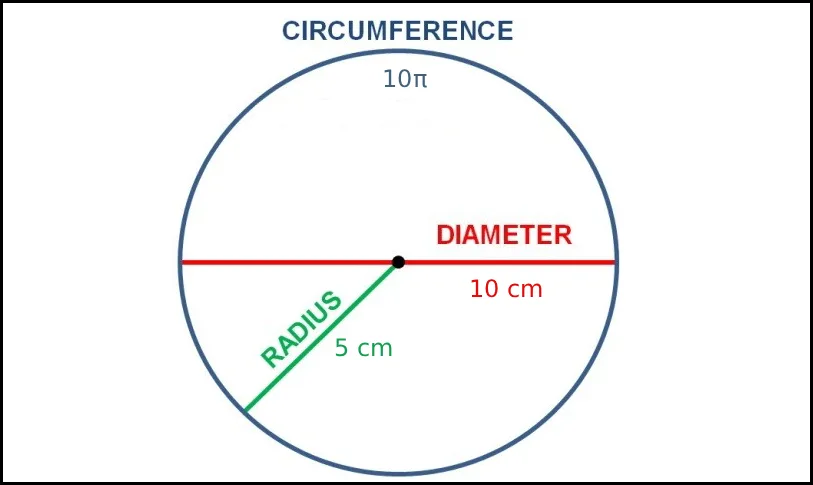
Where A = area, r = radius (the distance from the centre to the edge) and π ≈ 3.14159.
Example: Find the area of a circle with radius 5 cm.
A = π × 5²
A = π × 25
A ≈ 78.54 cm²
Method 2: Using the Diameter
If you are only given the diameter, halve it to find the radius first: r = d ÷ 2.
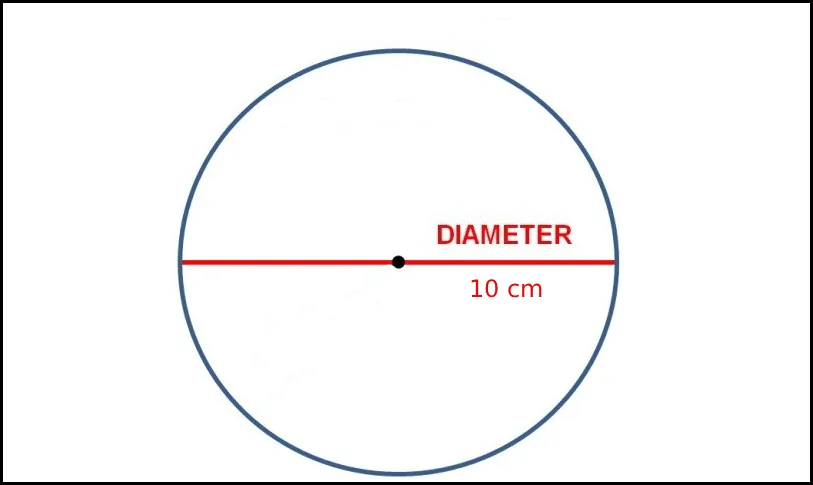
Formula: A = π(d/2)² or A = πd²/4
Where d = diameter (the distance across the circle through the centre).
Example: Find the area of a circle with diameter 10 cm.
A = π × (10 ÷ 2)²
A = π × 5²
A ≈ 78.54 cm²
Or, using A = πd²/4:
A = π × 10² ÷ 4
A = π × 100 ÷ 4
A ≈ 78.54 cm²
Method 3: Using the Circumference
If you are only given the circumference C (the perimeter of the circle), find the radius first.
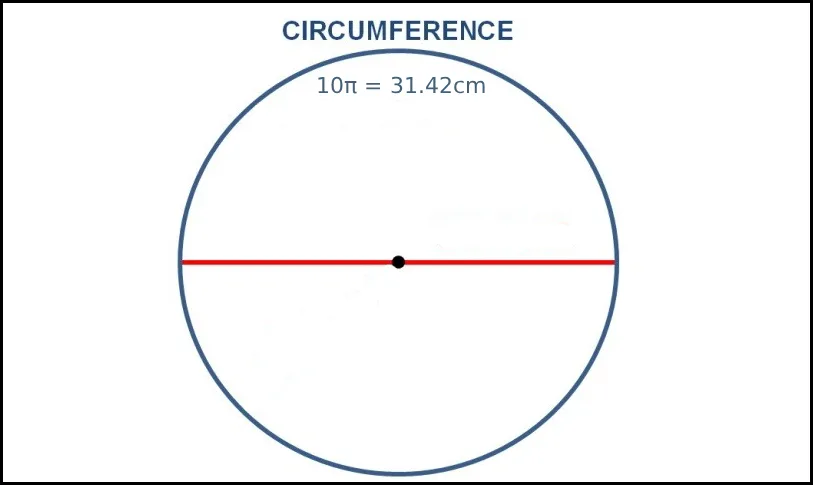
How it works: Since C = 2πr, the radius is r = C ÷ 2π. Squaring gives r² = C² ÷ 4π². Substituting into A = πr²:
A = π × C² ÷ 4π²
Formula: A = C² ÷ (4π)
Example: Find the area of a circle with circumference 31.42 cm.
A = 31.42² ÷ (4π)
A = 987.22 ÷ 12.566
A ≈ 78.56 cm² (about 78.54 cm², since 31.42 cm is a rounded circumference for a radius of 5 cm)
Area of a Circle Formulas at a Glance
| You know | Formula |
|---|---|
| Radius (r) | A = πr² |
| Diameter (d) | A = πd² ÷ 4 |
| Circumference (C) | A = C² ÷ (4π) |
Common Mistakes to Avoid
- Using the diameter as the radius. Always halve the diameter first.
- Forgetting to square the radius. πr² means π × r × r, not π × r.
- Leaving out square units. Area is always in square units, such as cm² or m².
- Rounding π too early. Keep π (or use your calculator’s π button) until the final step.
Want to practise more? Try our guides to finding the area of the shaded region, the area of a triangle and the area of a square.
Learn maths and other subjects step by step with our personalized online tutoring. Book a free trial class with an expert math tutor today.
Conclusion
The area of a circle always comes back to one formula, A = πr². If you're given the diameter, halve it to get the radius first. If you're given the circumference, divide it by 2π to find the radius, then use the formula as normal.
Most mistakes come from using the diameter instead of the radius, forgetting to square, or leaving off square units. Slow down on those three points and circle area questions become some of the easiest marks on a test.
Frequently Asked Questions
What is the formula for the area of a circle?
The area of a circle is A = πr², where r is the radius. For a circle with a radius of 3 cm, the area is π × 9 ≈ 28.27 cm².
How do you find the area of a circle using the diameter?
Halve the diameter to get the radius, then use A = πr². You can also use A = πd² ÷ 4, which gives the same result.
How do you find the area from the circumference?
Divide the circumference by 2π to get the radius, then square it and multiply by π. Alternatively, use A = C² ÷ 4π.
What value of π should I use?
Use the π button on your calculator for the most accurate answer. If a question says to use 3.14 or 22/7, follow that instruction. Some questions ask for the answer in terms of π, such as 9π cm².
What is the most common mistake with circle area?
Using the diameter in place of the radius. This makes the answer four times too big. Always check whether the value you're given is the radius or the diameter.