
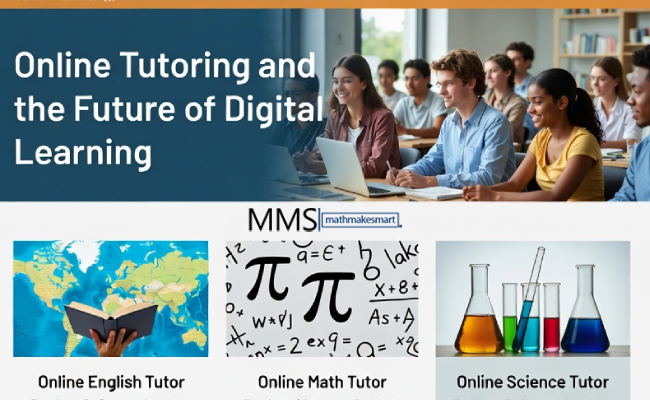
In today’s fast-paced world, online tutoring has emerged as a transformative force in education. No longer limited to traditional classrooms, students can access high-quality, personalized instruction from anywhere with an internet connection. Whether it’s an Online English Tutor helping with language fluency, an Online Math Tutor breaking down complex equations, or an Online Science Tutor guiding virtual experiments, this digital approach is reshaping how we learn. The global online tutoring services market is experiencing explosive growth.
Recent estimates place the market at around USD 10-12 billion in 2024-2025, with projections showing it reaching USD 23-26 billion by 2030, driven by CAGRs of 14-15%. This surge reflects increasing demand for flexible, effective learning solutions in a post-pandemic era where digital tools have become essential.

What Is Online Tutoring and Why Is It Thriving?
Online tutoring refers to one-on-one or small-group instruction delivered via video calls, shared screens, interactive whiteboards, and digital platforms. Unlike self-paced courses, it offers real-time interaction with qualified tutors.
Key reasons for its rise include:
- Flexibility and Convenience — Sessions fit busy schedules, eliminating travel time.
- Global Access — Students connect with expert tutors worldwide, regardless of location.
- Personalized Attention — Tutors adapt lessons to individual needs, pacing, and learning styles.
- Cost-Effectiveness — Often more affordable than in-person options due to lower overhead.
Research shows strong outcomes: many students report grade improvements within months, with effect sizes of 0.3-0.55 standard deviations in subjects like math and reading. Over 76% of tutored students see better grades, and programs reduce grade repetition while boosting confidence.
Core Benefits of Online Tutoring
Online tutoring delivers numerous advantages over traditional methods.
- Personalized Learning — Tutors tailor sessions to strengths and weaknesses. An Online Math Tutor might focus on algebra gaps, while an Online English Tutor emphasizes conversation skills.
- Improved Engagement and Confidence — Real-time feedback and interactive tools make learning dynamic. Students often feel more comfortable asking questions virtually.
- Accessibility for All — Ideal for rural areas, busy families, or students with disabilities. Virtual platforms support screen sharing, recordings for review, and multilingual options.
- Proven Academic Gains — Studies on online math tutoring show significant test score increases (up to 0.26 SD) and better grades. Similar benefits extend to English and science.
- Time and Cost Savings — No commuting means more study time, and competitive pricing makes quality education affordable.

Spotlight on Key Subjects
- Online Math Tutor sessions excel with digital whiteboards for real-time problem-solving. Students tackle equations step-by-step, with tutors providing instant corrections. Benefits include higher retention and reduced math anxiety.
- Online English Tutor platforms focus on speaking, writing, and comprehension. Interactive tools like shared documents and pronunciation feedback accelerate language mastery, especially for non-native speakers.
- Online Science Tutor sessions use virtual labs for safe experiments in chemistry, biology, or physics. Students observe reactions or dissections digitally, gaining hands-on understanding without physical risks.

The Future of Digital Learning: Trends Shaping Tomorrow
Online tutoring is evolving rapidly with emerging technologies.
- AI Integration — Artificial intelligence powers adaptive platforms that analyze performance and suggest customized paths. AI assists tutors with lesson planning or provides instant feedback, making online tutoring more efficient.
- Immersive Technologies (VR/AR) — Virtual reality transports students to historical events or molecular structures. Augmented reality overlays information on real-world objects. These tools enhance engagement in science and math.
- Advanced meeting & Screen sharing softwares — The best free online tutoring and meeting softwares are very helpful for the classes, screen sharing and recording.
- Microlearning and Gamification — Short, interactive modules with rewards keep learners motivated. AI personalizes these experiences further.
- Hybrid Models — Blending online and in-person elements offers the best of both worlds, with data-driven insights optimizing outcomes.

Challenges and Solutions
Despite advantages, challenges exist:
- Digital Divide — Not everyone has reliable internet. Solutions include offline resources and subsidized access.
- Screen Fatigue — Balanced with breaks and interactive elements.
- Maintaining Human Connection — Quality platforms prioritize tutor-student rapport.
Ethical AI use, data privacy, and bias prevention are crucial as technology advances.
Conclusion: Embracing the Digital Learning Revolution
Online tutoring is more than a trend—it’s the future of accessible, effective education. From Online English Tutor sessions building communication skills to Online Math Tutor and Online Science Tutor experiences fostering deep understanding, digital learning empowers students globally. As AI, VR, and personalization advance, online tutoring will become even more impactful. Whether you’re a student seeking help or a parent supporting growth, now is the ideal time to explore these tools. The future of learning is digital, inclusive, and brighter than ever.