
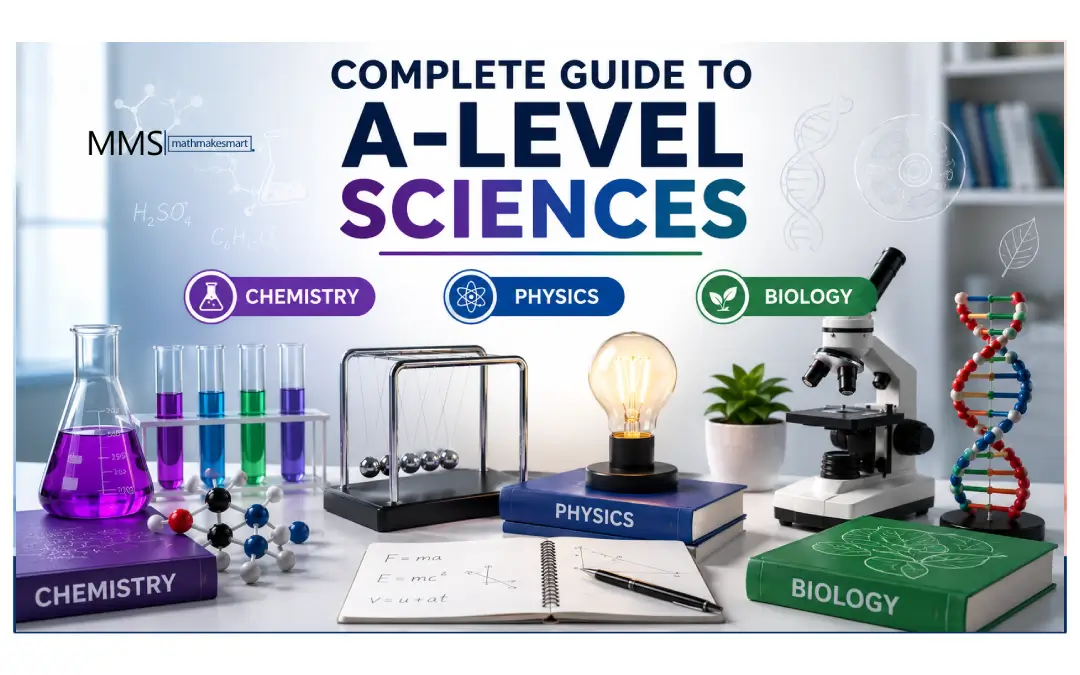
The jump from GCSE to A-Level science is one of the most significant academic transitions a student will make. The content is deeper, the exams are longer, and the expectations around independent thinking are far higher. Many students who sailed through GCSE science find themselves genuinely struggling in Year 12 not because they aren’t capable, but because A-Level science demands a completely different approach. This guide by the best internationally recognized online tutoring platform covers what students and parents need to know about A-Level Chemistry, Physics, and Biology: what’s in each subject, how they’re assessed, and what separates students who achieve top grades from those who don’t.
Why A-Level Sciences Matter
A-Level sciences are gateway qualifications. Medicine, dentistry, nursing, pharmacy, engineering, computer science, veterinary science, and environmental science all require at least one A-Level science. Many top university courses require two or three. The grades matter enormously; a B in Chemistry versus an A can determine whether an offer comes from a Russell Group university or not. Beyond university entry, the analytical and problem-solving skills developed in A-Level sciences are genuinely useful across almost every career path, from finance to law to data science.

A-Level Chemistry
What Is Covered?
A-Level Chemistry is taught over two years and assessed entirely at the end of Year 13. The content is divided into physical, inorganic, and organic chemistry. Our Online Physics Tutors will teach you the following topics using their experience.
1. Physical Chemistry
- Atomic structure and bonding
- Energetics (enthalpy, Hess’s Law, bond energies)
- Kinetics (reaction rates, activation energy, Arrhenius equation)
- Equilibria (Le Chatelier’s principle, Kc, Kp expressions)
- Electrochemistry and redox
- Acids, bases, and buffers
2. Inorganic Chemistry
- Periodicity and the periodic table
- Group 2 and Group 7 chemistry
- Transition metals (complex ions, colour, catalysis)
- Reactions of ions in solution
3. Organic Chemistry
- Alkanes, alkenes, halogenoalkanes
- Alcohols, aldehydes, ketones, carboxylic acids, esters
- Amines, amino acids, and polymers
- Mechanisms: substitution, addition, elimination, condensation
Practical Skills
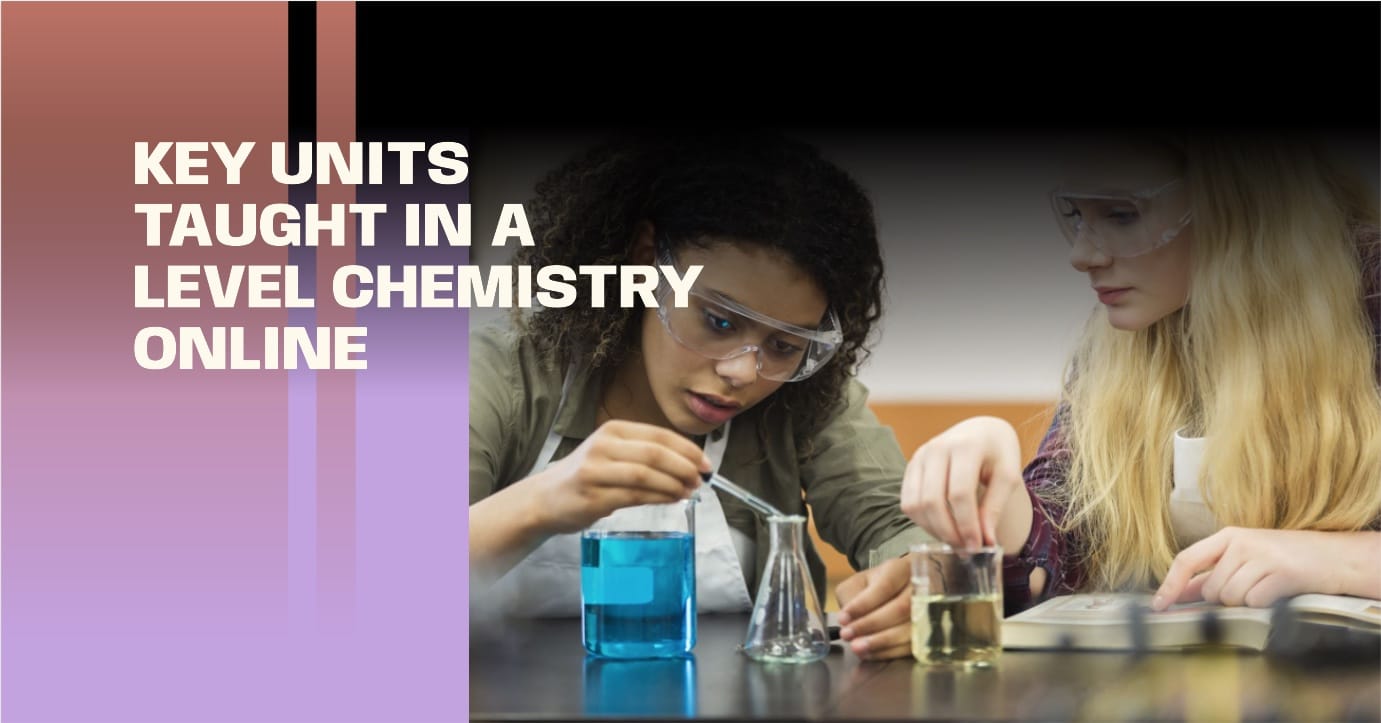
All major exam boards require students to complete a minimum of 12 required practicals. These are assessed through written exam questions rather than a separate practical exam, but understanding the practical skills, planning, analysing, and evaluating is essential.
Exam Boards
AQA, Edexcel, and OCR all offer A-Level Chemistry. OCR also offers a separate OCR Chemistry A and OCR Chemistry B (Salters); the Salters course uses a context-based approach and suits students who prefer learning through real-world applications.
What Makes A-Level Chemistry Hard?
The most common difficulty is the sheer volume of content. Students often understand individual topics but struggle to connect them; for example, understanding how kinetics, equilibria, and energetics interlink in a reaction mechanism. Success requires not just knowing facts but applying them to unfamiliar contexts under timed conditions.
A-Level Physics
What Is Covered?
A-Level Physics develops mathematical reasoning alongside conceptual understanding. Students need to be comfortable with algebra, trigonometry, and logarithms; weak maths is the most common reason students underperform in Physics. Our Online Physics Tutors will teach you the following topics using their experience.
Core Topics (all boards)
- Mechanics: forces, motion, Newton’s laws, momentum, energy
- Electricity: circuits, resistance, EMF, internal resistance
- Waves: properties, superposition, interference, diffraction
- Quantum physics: photoelectric effect, wave-particle duality
- Nuclear physics: radioactivity, decay, nuclear energy
Further Topics (varies by board)
- Fields (gravitational, electric, magnetic)
- Capacitors and exponential decay
- Oscillations and simple harmonic motion
- Astrophysics and cosmology (optional modules on some boards)
- Medical physics (optional on some boards)
Maths in A-Level Physics
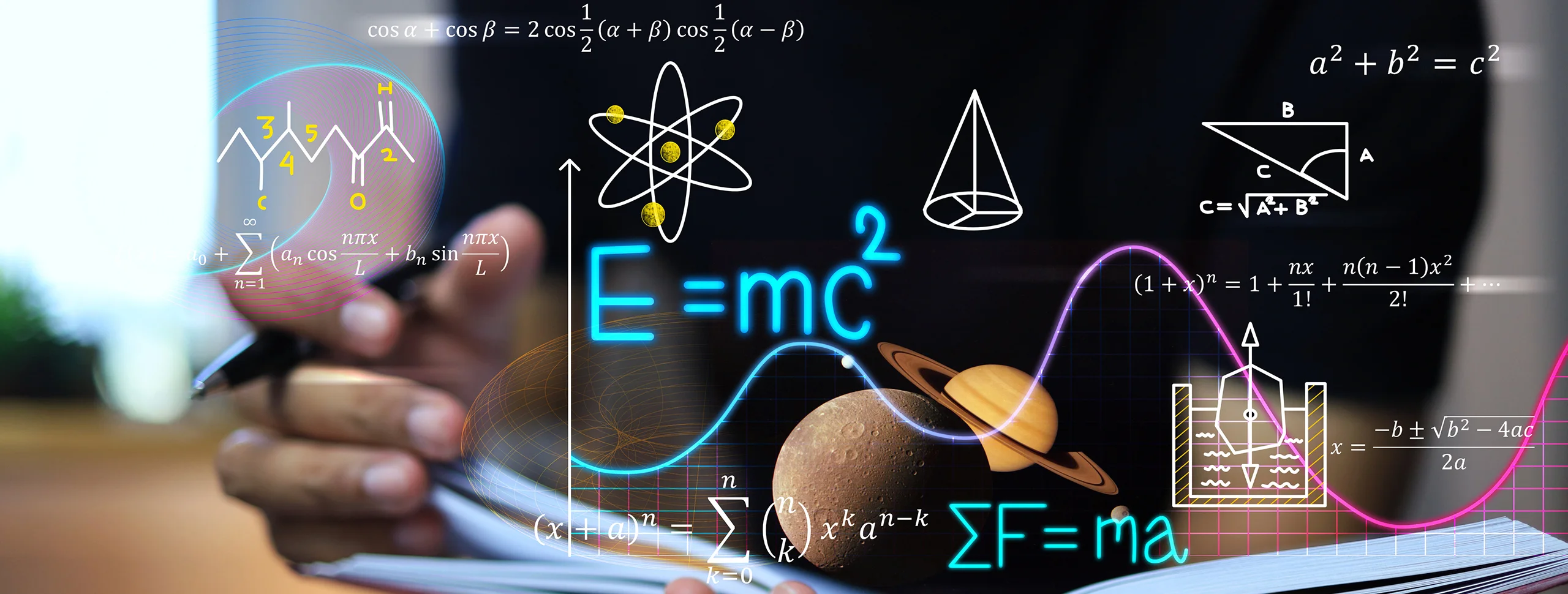
Around 40% of marks in A-Level Physics exams come from mathematical skills. This is higher than most students expect. Rearranging equations, working with significant figures, using logarithms and exponentials, and interpreting graphs are all examined regularly.
Exam Boards
AQA is the most widely used. Edexcel A-Level Physics is considered more mathematically rigorous and is favoured by some independent schools. OCR offers two specifications: OCR A and OCR B (Advancing Physics), which takes a more conceptual and historical approach.
A-Level Biology
What Is Covered?
A-Level Biology has the largest content volume of the three sciences. The breadth of topics is significant; students move from molecular biology to ecosystems, from genetics to physiology, within the same two-year course. Our Online Biology Tutors will teach you the following topics using their experience.
Core Topics
- Cell biology: structure, division, membranes, transport
- Biological molecules: carbohydrates, lipids, proteins, nucleic acids, enzymes
- Genetics: DNA replication, transcription, translation, inheritance, mutation
- Physiology: the heart, breathing system, kidney, nervous system, hormones
- Ecology: populations, nutrient cycles, energy transfer, biodiversity
- Evolution and classification
- Plant biology: photosynthesis, transpiration, tropisms
Common Options (varies by board)
- Immunology and forensics
- Microbiology and disease
- Neurobiology and behaviour
- Biotechnology and gene technology

The Essay Requirement
AQA A-Level Biology includes a synoptic essay in Paper 3. Students must write a coherent, well-structured essay connecting multiple topic areas for example, “The role of proteins in living organisms.” This requires deep cross-topic knowledge and effective exam technique, not just factual recall.
Exam Boards
AQA is the most common. OCR A-Level Biology A covers a very similar content range. Edexcel Biology A (Salters Nuffield) uses a storyline-based context approach similar to OCR Chemistry B.
How Are A-Level Sciences Assessed?
All A-Level sciences are assessed entirely through written exams at the end of Year 13, plus a separate practical endorsement:
| Component | Weighting |
|---|---|
| Paper 1 | 35% |
| Paper 2 | 35% |
| Paper 3 | 30% |
| Practical Endorsement | Pass/Fail (doesn’t affect grade) |
The practical endorsement is recorded separately on the A-Level certificate and is required by most science degree programmes at Russell Group universities.
Grade Requirements for University Entry
| Degree | Typical A-Level Requirements |
|---|---|
| Medicine | AAA including Chemistry + Biology (or Chemistry + Physics) |
| Dentistry | AAA including Chemistry |
| Pharmacy | ABB–AAB including Chemistry |
| Engineering | AAB–AAA including Maths + Physics |
| Veterinary Science | AAA including Chemistry + Biology |
| Environmental Science | ABB including Biology or Chemistry |
| Biochemistry | AAB including Chemistry + Biology |
| Physics (degree) | AAA including Maths + Physics |
Why Students Struggle at A-Level and How to Fix It
The Year 12 to Year 13 knowledge gap: Many students leave Year 12 with weaker foundations than they realise. Year 13 content builds directly on Year 12 gaps left unaddressed in Year 12 compound into serious problems by exam season.
Memorisation vs. understanding: A-Level sciences reward students who understand mechanisms and principles, not those who memorise facts. A student who understands why a reaction produces a particular product will outperform one who memorised the product but can’t explain the mechanism in an unfamiliar context.
Exam technique at A-Level: A-Level mark schemes reward specific language and logical sequencing of answers. Students who understand content but don’t write in the right format lose significant marks. Working through mark schemes carefully is as important as revising content.
How Math Make Smart Supports A-Level Science Students
Math Make Smart provides 1-to-1 online tutoring for A-Level test preparation of Chemistry, Physics, and Biology with subject-specialist tutors experienced in AQA, Edexcel, and OCR specifications. Sessions are available from Year 12 through to exam preparation and are tailored to each student’s specific topic gaps and exam board. Every new student starts with a completely free trial lesson no payment required.
Book Your Free A-Level Science Trial Lesson →
Frequently Asked Questions
Can I take all three sciences at A-Level? Yes, though it is demanding. Triple science A-Level (Chemistry, Biology, Physics) is common for medicine applicants. Most students taking three sciences also take Maths, making four subjects in total.
Is A-Level Chemistry harder than A-Level Biology? Most students find Chemistry harder due to the mathematical elements in physical chemistry and the complexity of organic mechanisms. Biology has more content to memorise but is considered more accessible overall.
When should my child start A-Level science tutoring? Ideally from the beginning of Year 12, before gaps develop. Students who wait until Year 13 to seek help are often working against time. Early tutoring is significantly more effective than intensive support in the weeks before exams.
How many hours of independent study does A-Level science require? Most A-Level guidance recommends 4–6 hours of independent study per subject per week, on top of timetabled lessons. Students taking three sciences should expect to commit 12–18 hours of study per week outside school.